
Advocating for Every Language, Every Child: How NAEYC Champions Multilingual Learners
Every Child Deserves to Be Heard
As an ESOL educator in rural Middle Georgia, I have the privilege of working with multilingual children and families whose resilience, determination, and cultural strengths enrich our schools every day. Unfortunately, many of these families also face barriers that make it difficult to access high-quality educational opportunities. Language differences, unfamiliar school systems, and limited access to resources can create challenges that extend far beyond the classroom. These experiences have reinforced my belief that strong advocacy is essential if every child is to receive an equitable start in life.
One organization that has consistently led this work is the National Association for the Education of Young Children (NAEYC). Through research, public policy, professional learning, and family engagement, NAEYC has become a national voice for young children, particularly those from culturally and linguistically diverse backgrounds. Rather than viewing multilingualism as a barrier, NAEYC encourages educators to recognize children's home languages and cultures as valuable assets that strengthen learning and development (NAEYC, 2020).
Who is NAEYC and Why Does Their Work Matter?
Founded in 1926, NAEYC is the nation's largest professional organization dedicated to improving the quality of early childhood education. Its mission extends beyond supporting educators; the organization advocates for policies that ensure all children have access to safe, inclusive, and developmentally appropriate learning environments. NAEYC provides professional standards, evidence-based resources, accreditation, and legislative advocacy that influence early childhood education across the United States.
One of the organization's most influential contributions has been its 2020 Position Statement on Early Learning for Dual Language Learners, which emphasizes that multilingual children thrive when their languages, identities, and cultures are valued within early childhood settings (NAEYC, 2020). This work has helped shift the conversation from language deficits to language assets, encouraging schools to create environments where multilingual learners can succeed academically while maintaining their cultural identity.
Leadership in Action: Advocating for Change
Why this Matters to Me?
My work as an ESOL teacher has shaped the way I view advocacy. Many of my students have immigrated from countries affected by war, political instability, or economic hardship. Others have experienced long separations from parents or siblings before arriving in the United States. These experiences remind me that schools provide far more than academic instruction—they offer children safety, belonging, and hope.
Leadership that Creates Lasting Change
Effective leadership is not limited to holding a formal title. True leaders inspire others to work toward meaningful and lasting change. NAEYC demonstrates this type of leadership by partnering with educators, families, researchers, and policymakers to improve educational opportunities for young children.
Bond (2016) explains that professional organizations play an important role in developing educators into advocates who understand how policy decisions affect classroom practice. By participating in professional organizations, educators learn to move beyond their individual classrooms and become voices for children and families at local, state, and national levels. NAEYC models this approach by equipping educators with research, advocacy tools, and opportunities to engage in policy discussions that improve early childhood education.
Their Contributions
Promotes the value of home languages in early childhood settings.
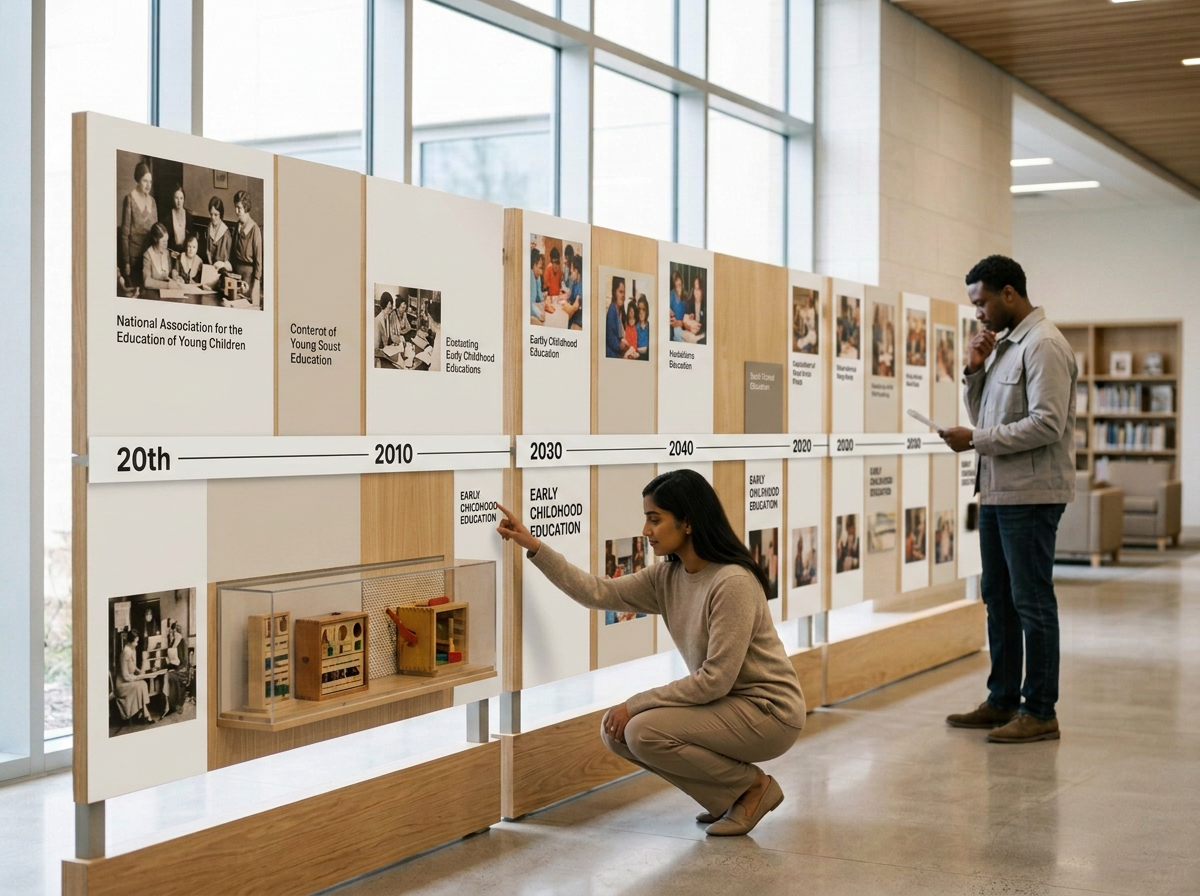
1985 Launches the Accreditation of Early Learning Programs, establishing one of the first higher standards in early childhood.
Provides guidance for linguistically responsive teaching.
Advocates for policies that promote equity and access.
The Challenges
2001 No Child Left Behind increases accountability and prompts concerns for what is developmentally appropriate.
Discrimination and stereotypes.
Limited access to high-quality programs, especially in rural areas.
Insufficient professional development for early childhood educators.
Their Impact
Keeps educators informed on state and national policy conversations.
Empowers educators to use best practices
Improves outcomes for children and strengthens communities.
References
Bond, N. (2016). Preservice teacher leaders learn to advocate legislatively through professional organizations. Journal of Curriculum & Teaching, 5(2), 25–36.
National Association for the Education of Young Children. (2020). Position statement: Early learning for dual language learners. https://www.naeyc.org/resources/position-statements/early-learning-dual-language-learners
National Association for the Education of Young Children. (n.d.). Advancing equity in early childhood education. https://www.naeyc.org
Zero to Three. (2021). Supporting dual language learners in early childhood. https://www.zerotothree.org
Support for Communities
Advocacy is not a single event but an ongoing commitment to improving the lives of children and families. NAEYC has shown that lasting change occurs when educators, families, researchers, and policymakers work together toward a common purpose. Their leadership continues to influence classrooms across the nation by promoting inclusive practices, professional excellence, and equitable opportunities for every child.